
What Independence Means to Us
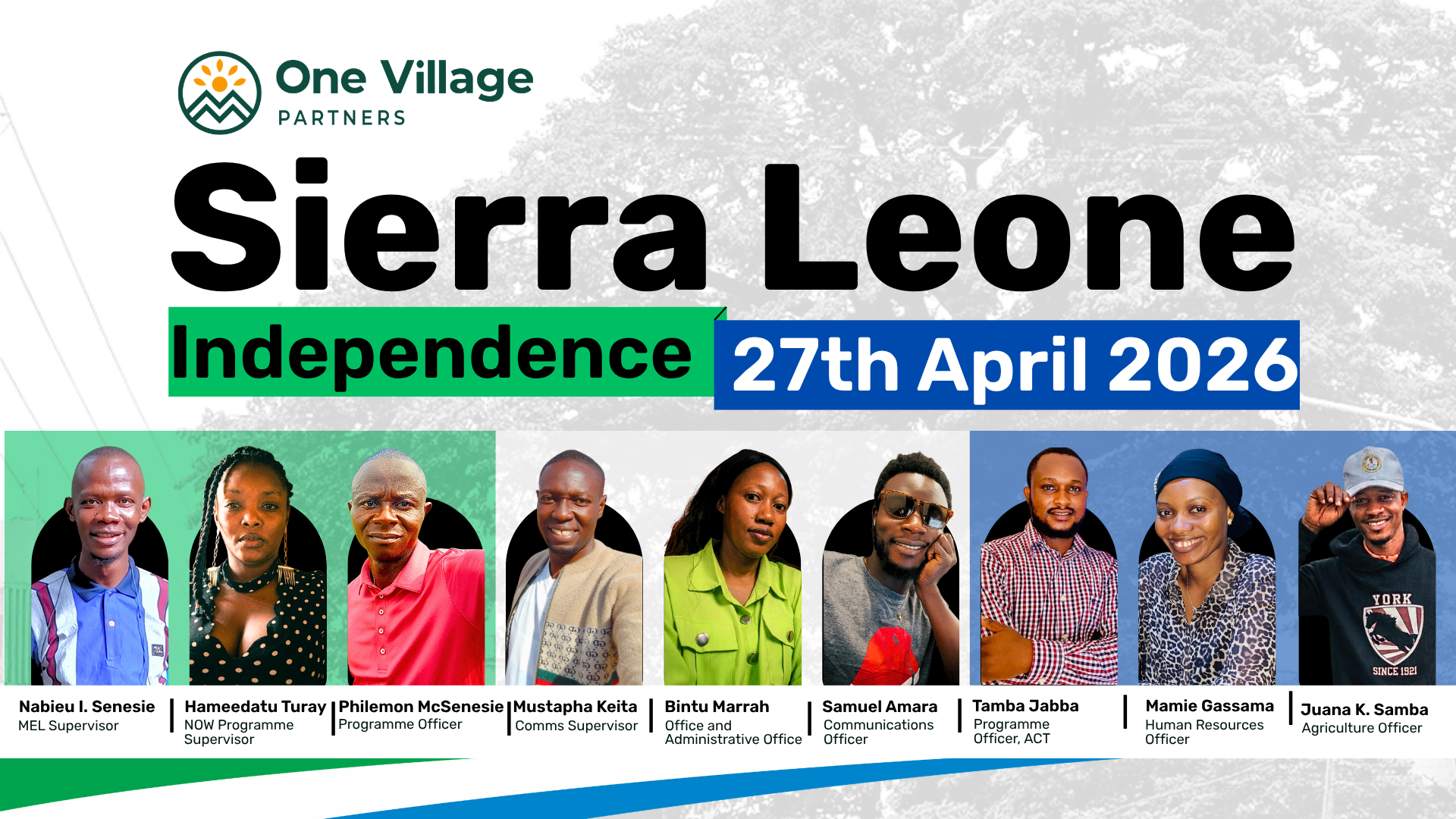
On April 27, Sierra Leone will celebrate 65 years of independence from British colonial rule, which lasted from 1808 to 1961. On Independence Day, we celebrate the nation’s freedom to chart its own future with dignity, pride, and self-determination. Across the country, people wear green, white, and blue to honor their national identity and reflect on the meaning of independence today.
At One Village Partners, we see a connection between Sierra Leone’s national independence and the community-led work happening in the rural villages we partner with. Independence is not only a moment in history, it is also communities shaping their own paths forward, making decisions locally, and creating lasting change on their own terms.
To honor this year’s Independence Day, we asked members of our team to share their perspectives on what independence means to them and how they see it come to life through our work.
“Independence, to me, means having the ability and freedom to make decisions and sustain one’s future without heavy reliance on others. In community work, we focus on empowering people through skills, leadership, and ownership, so they can manage their own development. True success is when communities become self-reliant.”
- Nabieu Ibrahim Senesie, Monitoring, Evaluation & Learning Supervisor
“Independence is not merely about commemorating a historical milestone such as Sierra Leone's Independence. It also entails fostering ownership of development decisions, enabling people to participate actively, ensuring their voices are heard, and promoting accountability and transparency. This approach is already having a tangible impact in our partner communities. Community members, once seen as users or beneficiaries, are increasingly becoming owners of their own development processes. They are actively engaged in inclusive monitoring and evaluation of programs, sharing feedback, and utilizing their own local resources, knowledge systems, leadership structures, and cultural practices. They are doing this both independently and, where necessary, with our support. This way of working reflects the true meaning of independence, as our partner communities are taking charge of and governing their own development progress.”
- Philemon Vandi McSenesie, Program Officer
“Independence means a lot to me. It makes me remember our ancestors who have passed away fighting for our freedom.”
- Juana K. Samba, Agriculture Officer
“Independence means freedom to make decisions for yourself without the interference of external parties. At OVP, we shift the power to communities to make decisions relating to their desired needs by themselves. This is mostly done during the project priorities voting exercise. This demonstrates the principles of independence, honing that instead of the organization making decisions about their wellbeing, they must take the lead.”
- Tamba Jabba, Community Action Program Officer
“Independence means freedom that requires the right support systems; clear expectations, access to resources, and a culture of trust. When it comes to working with partner communities, independence becomes even more important and nuanced. It means shifting from a ‘doing for’ approach to a ‘working with’ or ‘enabling’ approach.”
- Mamie Gassama, Human Resources Officer
“Putting this in the context of National Independence, it speaks to the same things as articulated, even though a little different, as it is more collective. Since independence, Sierra Leone has been grappling with multidimensional poverty, partially caused by colonialism. However, the country enjoys the freedom it sought from British colonization. The country now decides how to use its resources, change governance, etc.
On how this plays out in our work, I would say the approach we use in working with communities matters. Recognizing the importance of having the communities lead their own change, decide on what's good for them and what they see as true change falls through our work as an organization. The communities now realize that they have all it takes to transform their lives for good as a result of the approach. They capitalize on this to sustain the changes in their communities. This has increased community ownership, grounded in dignity and pride.”
- Mustapha Keita, Communications Supervisor
“Independence, in the context of community partnerships, means fostering autonomy, self-sufficiency, and genuine control over the decision-making process, ensuring that the communities are the architects of their own future rather than merely beneficiaries of aid. It is the process of shifting from a ‘top-down’ approach to one where communities have the authority to manage their own resources, define their priorities, and sustain their improvements, thereby reducing long-term dependence on external support.”
- Samuel Amara, Communications Officer
“Independence is essential because it fosters self-confidence, personal growth, and emotional resilience by empowering individuals to make their own decisions and take responsibility for their lives. This typically applies to OVP and the works that we do with communities.”
- Bintu Marrah, Office and Administrative Assistant
“For me, independence means having the power to make decisions, meet my needs, and shape my future on my own terms. I believe it's not just about freedom, but about dignity, self-reliance, and having a voice. In the work we do with our partner communities, this plays out through empowerment. When women gain business skills, start saving, and contribute to household decisions, they become independent. When a family plans, solves emergency problems, and supports themselves, they sustain true independence in action. Here at OVP, our role is not just to create independence but to build capacity so our partner communities can stand strong, make their own choice, and continue progressing even without our interference.”
- Hameedatu E.J. Turay, Nurturing Opportunities for Women (NOW) Program Supervisor