
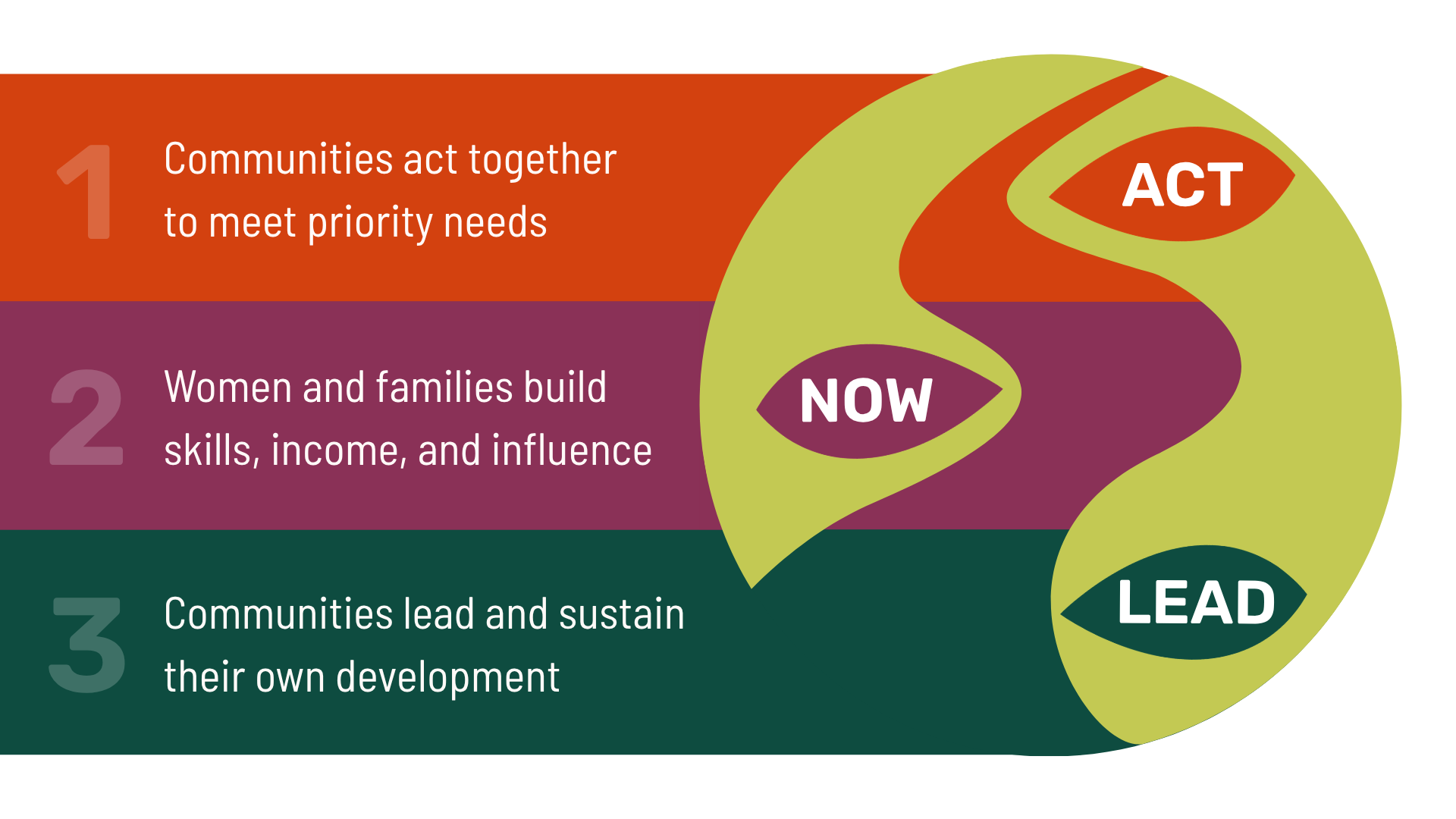
Last week, I had the opportunity to spend a day in Pejewa. It was a special visit, as Pejewa is a community that has completed all three parts of the One Village Partners pathway: ACT, NOW, and LEAD. They have a lot they have learned and a lot to share.
The village of Pejewa was founded several generations ago by 6 families, and the community takes pride in the fact that they are still on that original land. Their partnership with OVP began over a decade ago, when the community was smaller than its current population of 2,500 people.
Laying the foundation through ACT
In 2016, Pejewa began the Community Action Program (ACT). Trained community volunteers led the community to prioritize their greatest need, which was identified quickly as sanitation. When people returned to Pejewa after the civil war, open defecation was common, and residents described to me a community that smelled bad, felt dirty, and was often sick. Working with OVP, the people of Pejewa constructed 31 latrine structures, each with four units, and promoted handwashing. They are proud that today their village is free of open defecation, and sanitation-related sickness levels have significantly decreased.
Once the latrines were complete, residents met again and identified their next priority: a community rice store. Most people in Pejewa are involved in rice farming in some way (growing, harvesting, selling, etc.). After each harvest, families would store rice inside their homes, which attracted rodents, and people frequently suffered illnesses and itchy skin associated with mites. They worked together to build a large, dry, and secure communal rice store. They happily shared that once the rice moved out of their homes, the rodent problem went away and families felt better.
For their third and final ACT project, residents chose a rice mill. Before the mill, families had to carry or pay to transport rice about four miles on a very difficult road to Bunumbu for milling. That trip cost money and took time. Now they can mill rice right in Pejewa. One community member was excited to tell me that they can even mill rice in the middle of the night if they want to! I had the opportunity to see all of these projects and am happy to share that the latrines, rice store, and mill are all in great working order and continue to be used by the community.
The ACT part of the OVP pathway lays the foundation for our work and is about much more than the infrastructure projects that improve daily life. Through each project, the community builds on their ability to plan and work together. Volunteers gain experience in facilitation, planning, project management, and bringing people around a shared goal. Residents develop feelings of ownership through their participation in decision-making and contribution of resources and labor.
I met Isha Moah, a mother of five and a NOW public relations officer, who told me that before NOW she struggled to make quality time to play with her children and felt overwhelmed trying to manage household conflict. Now, when her children bring her a problem, she sits with them and talks it through; she has also made time for play and built a stronger relationship with her husband. Isha has applied the learning to her cake business, too, planning costs so she can understand and make a profit.
Once the NOW group completed the initial year of training, they went on to NOW Agribusiness and decided together they would grow rice as part of OVP’s supported agriculture activity. Today, a couple of years after that work, women are continuing to farm together as an informal cooperative. The group distributes seeds to grow, and after harvest, returns the seed they received with interest. The women are using that interest to support education in their community (more to come on that below!).
Massah Amara and her husband used what she learned through NOW to plan a rice-selling business. After each sale, they set aside the money needed to replace their stock, cover household and school expenses, and save what remained. They were surprised to find after some time that their savings grew to about 3,000 leones ($131 USD), which they used to build a home of their own after previously renting. Massah told me that they can now pay their children’s school costs without taking out a loan.
NOW strengthens women and households
After several years of working on ACT projects, the Nurturing Opportunities for Women (NOW) Program added another layer to Pejewa’s progress through the OVP pathway. I met with several women who completed NOW, and they described how their learning reached into family life, as well as supported their household income. Monthly conversations with husbands helped households discuss plans and resolve conflict, while women practiced setting goals and managing money.
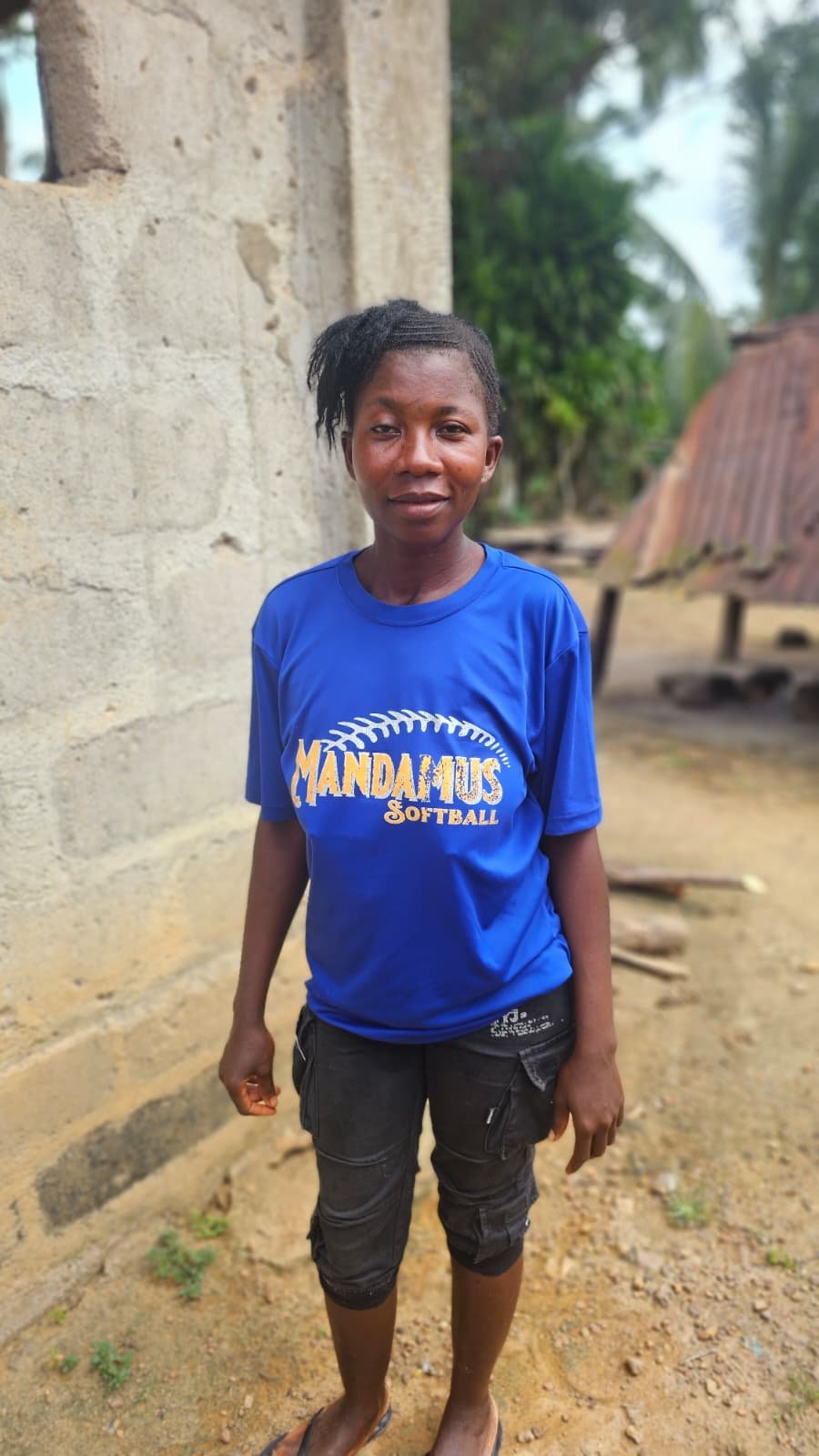
Isha Moah, NOW graduate
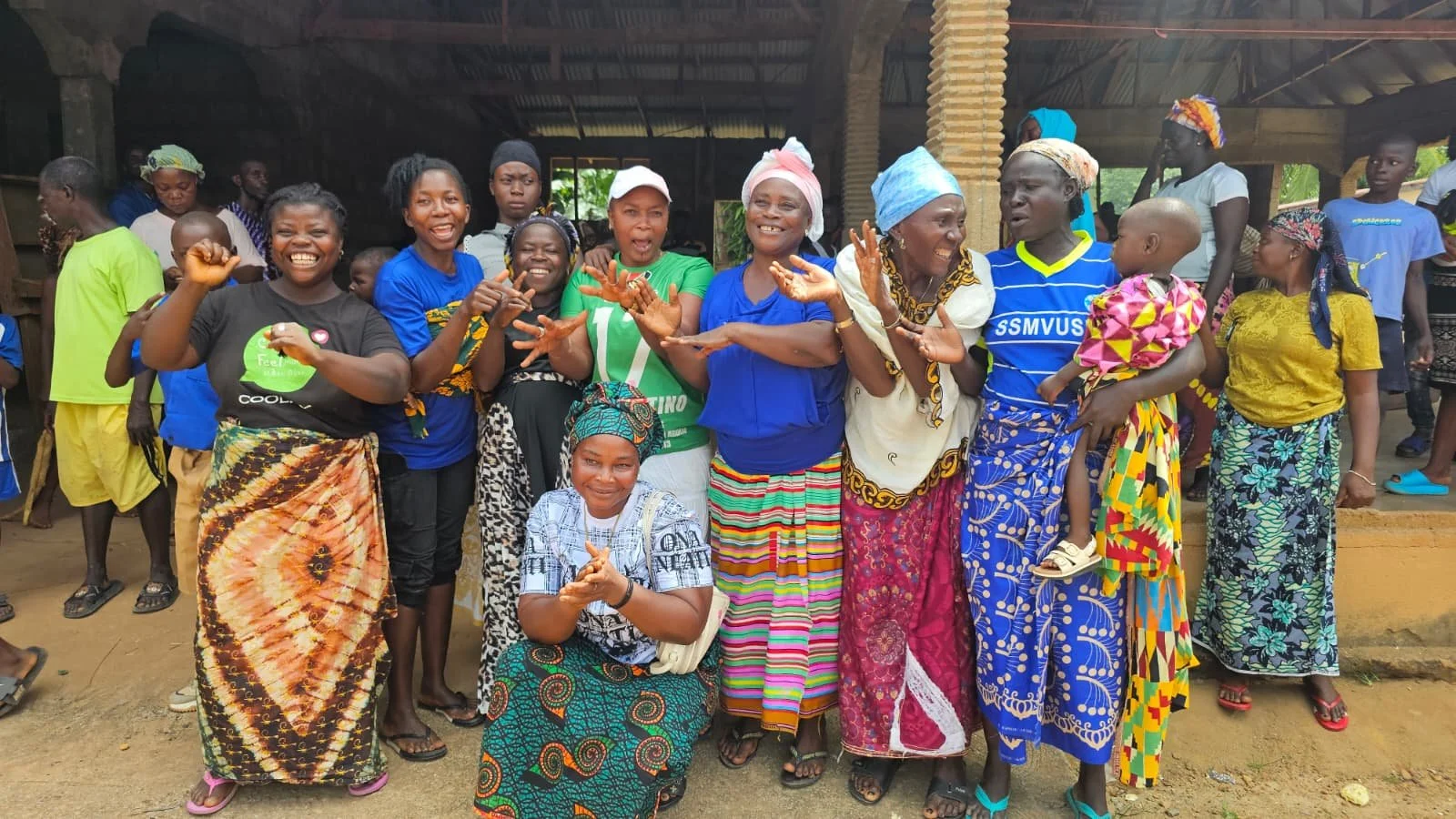
Pejewa NOW group
LEAD turns experience into community leadership
In 2022, Pejewa began LEAD, the third and final part of the OVP pathway. Through LEAD, communities identify their next priority, design a project, write proposals, manage budgets, and oversee implementation. OVP provides coaching and technical support while stepping further into the background; the community raises and contributes resources alongside OVP’s support. The purpose is for local groups to gain the confidence and practical experience to continue leading development after OVP’s direct involvement ends.
For Pejewa and four neighboring communities, the priority was a secondary school. Before it opened, students from Pejewa walked more than four miles to school in Bunumbu, while children from farther villages walked as much as seven miles. Community members described dangerous roads, exhaustion, missed classes, and high truancy. Girls faced additional risks: families worried about early pregnancy and the coercive relationships girls could encounter while attending school away from home.
With OVP’s support, the community worked with district education officials to secure approval for an official Ministry of Education school. The completed school includes five classrooms, teacher living quarters, a latrine, and a new well. Over 4 years, the community contributed around $7,500 USD in direct financial resources and thousands of hours of labor. This September, Pejewa celebrated their school’s opening.
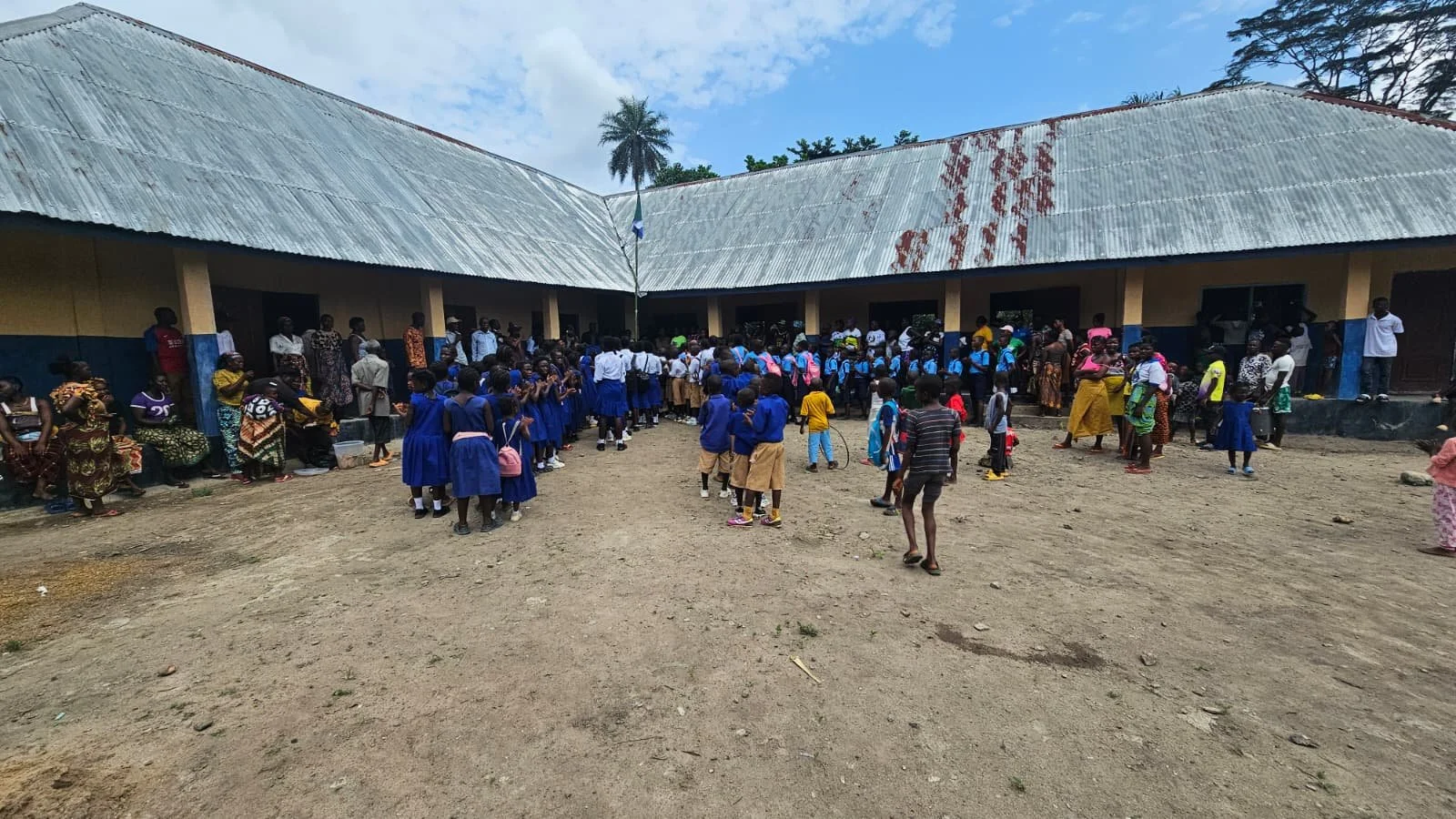
Pejewa Secondary School
The school currently has 46 students: 25 from Pejewa and the rest from nearby communities. Two students who use wheelchairs are among them; without a school close to home, they would not have been able to travel to attend secondary school. The school began with one grade and will add new grades over the next two years as this first class advances.
It is difficult to overstate how proud of this school the community is. It was brought up in every conversation I had: “Have you seen our new school?!” Isata Harding, who served as both an ACT and LEAD volunteer, spoke about the community leadership during the 4 years, and especially the various community chiefs who showed resilience and love for the community, all of whom personally contributed funds along the way.
OVP does not support operating costs of community projects. That’s an important part of our approach for sustainability. The people of Pejewa knew they would need to cover those costs, especially because not all teachers are yet on the government payroll. They shared with me their plan that combines modest student fees of 50 leones ($2.18 USD) per term, contributions from chiefs of 150 leones ($6.55 USD) per term, and contributions from other residents according to their ability. The plan reflects the same local ownership that shaped the school’s design: residents are organizing not only to build it, but sustain it for their children and their future.
One pathway with connected results
Pejewa’s experience shows how ACT, NOW, and LEAD reinforce one another. ACT gave residents practice in identifying priorities, organizing volunteers, and completing projects together. NOW strengthened women’s skills, voice, and ability to plan for their families and businesses. Those gains reach into education: many women told me that they can now cover school fees without taking loans, and the NOW: Agribusiness group directs some of its collective returns toward education. LEAD drew on the community’s experience and relationships to plan a school, work with government, contribute funds, and organize for its future.
Pejewa is already looking ahead and planning for what is next for them. They want to find a way to train youth and young adults in practical labor skills, and the head of the new secondary school has already developed a comprehensive proposal for cassava cultivation as part of students’ technical learning, which they have shared with potential supporters.
After LEAD, OVP’s direct programming with a community comes to an end. It can be a difficult transition for the community and for OVP staff who have developed strong relationships over many years. But the transition is so important for the sustainability of this work and for OVP’s ability to continue working with other communities through the pathway. Completing LEAD doesn’t mean the end of the friendship, however, and OVP will be back to check in on Pejewa in the future, excited to learn from them, and to see what they continue to do.